About Goose
Thirty years of jams, jellies, and marmalades
Goose has been making preserves and teaching others to make them for over 30 years, and the kitchen is where that knowledge gets passed on.
The kitchen
Three decades of seasonal fruit
I’ve been making and teaching preserves for over 30 years, and there’s always something to learn from a good batch. Fruit ripens differently each season, so I learned to read it: how sweet it is, how much pectin it carries, and when it needs a little help.
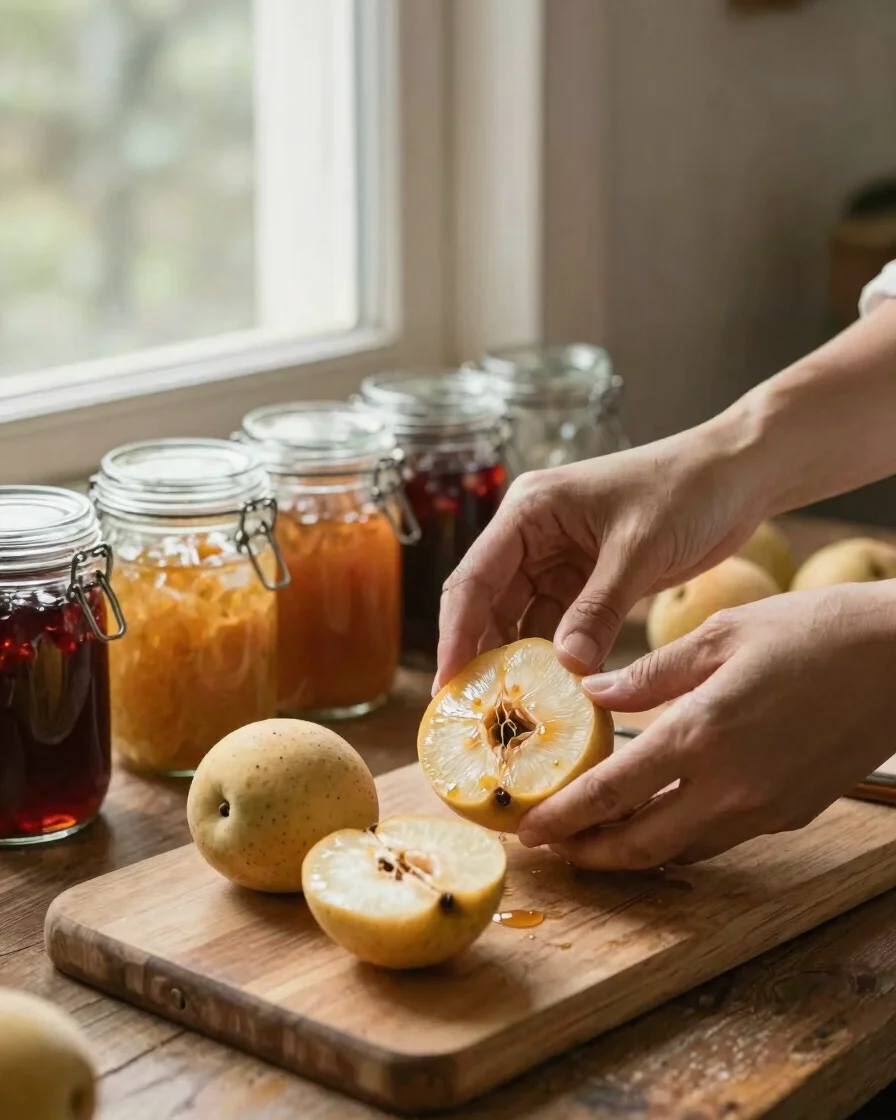
Classes are built around repeatable technique rather than complicated commercial equipment. You work with the fruit, the jars, and the steps that turn them into jam, jelly, or marmalade, and you leave with clear notes and jars you made yourself.
Approach
Preserving is kitchen science, not culinary mystery. Once you understand the sugar, the acid, and the pectin, you can make a good batch on any stove.
Goose
Inside a class
From fruit to finished jar
01
Cut and prepare the fruit
We start with the fruit itself: choosing it, washing it, and cutting it to the size the recipe needs.
02
Balance sugar, acid, and pectin
You measure and cook the batch while I explain what each ingredient does and how to judge set.
03
Fill and seal the jars
Jars are filled with headspace in mind, so every student learns the details that keep preserves safe.
04
Water bath canning
The jars go into the water bath. You leave with sealed jars you made yourself, plus clear notes and tested proportions.